Beyond cancer: How processed meat and poultry drive type 2 diabetes
Vegan Society of Canada News
Published October 18th 2024
Updated March 12th 2026
Processed meat and red meat are likely the most widely sold, aggressively advertised to all demographics, and institutionally normalized Group 1 and Group 2 carcinogenic substances in the world. At this point, we should not need further evidence to convince the public that processed meat, much like other Group 1 carcinogens such as tobacco, asbestos, and lead, is dangerous. Nevertheless, the animal agriculture lobby and various entities continue to promote these hazardous products, effectively encouraging consumers to increase their cancer risk while prioritizing profit over human health and animal lives.
As with tobacco, asbestos, and lead, society will look back on this era with bewilderment decades from now. Today, we are still dealing with the fallout of tobacco-related diseases, stemming in part from 1940s advertisements featuring healthcare professionals who recommended smoking. Unfortunately, it is highly likely that we will grapple with the devastating consequences of animal agriculture for many more decades, and countless human and non-human animals will continue to suffer and die before meaningful change takes place.animal flesh
For some, more evidence is still needed. Today’s article examines new research regarding the link between the consumption of meat and type 2 diabetes. Specifically, a new and extensive meta-analysis recently reviewed 31 cohorts, encompassing 1,966,444 adults across multiple continents.
The average consumption of different types of meat in aggregate is represented below.
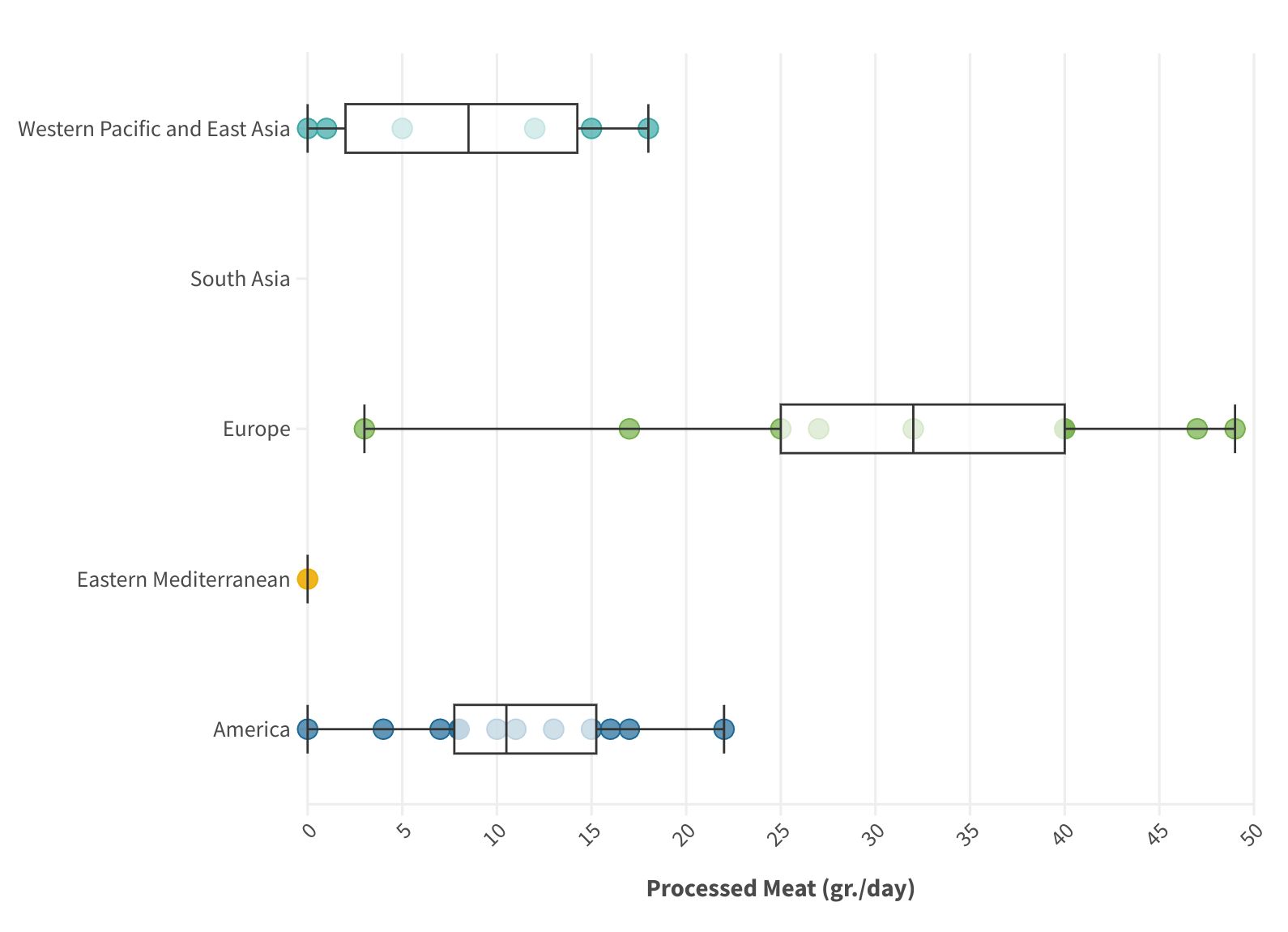
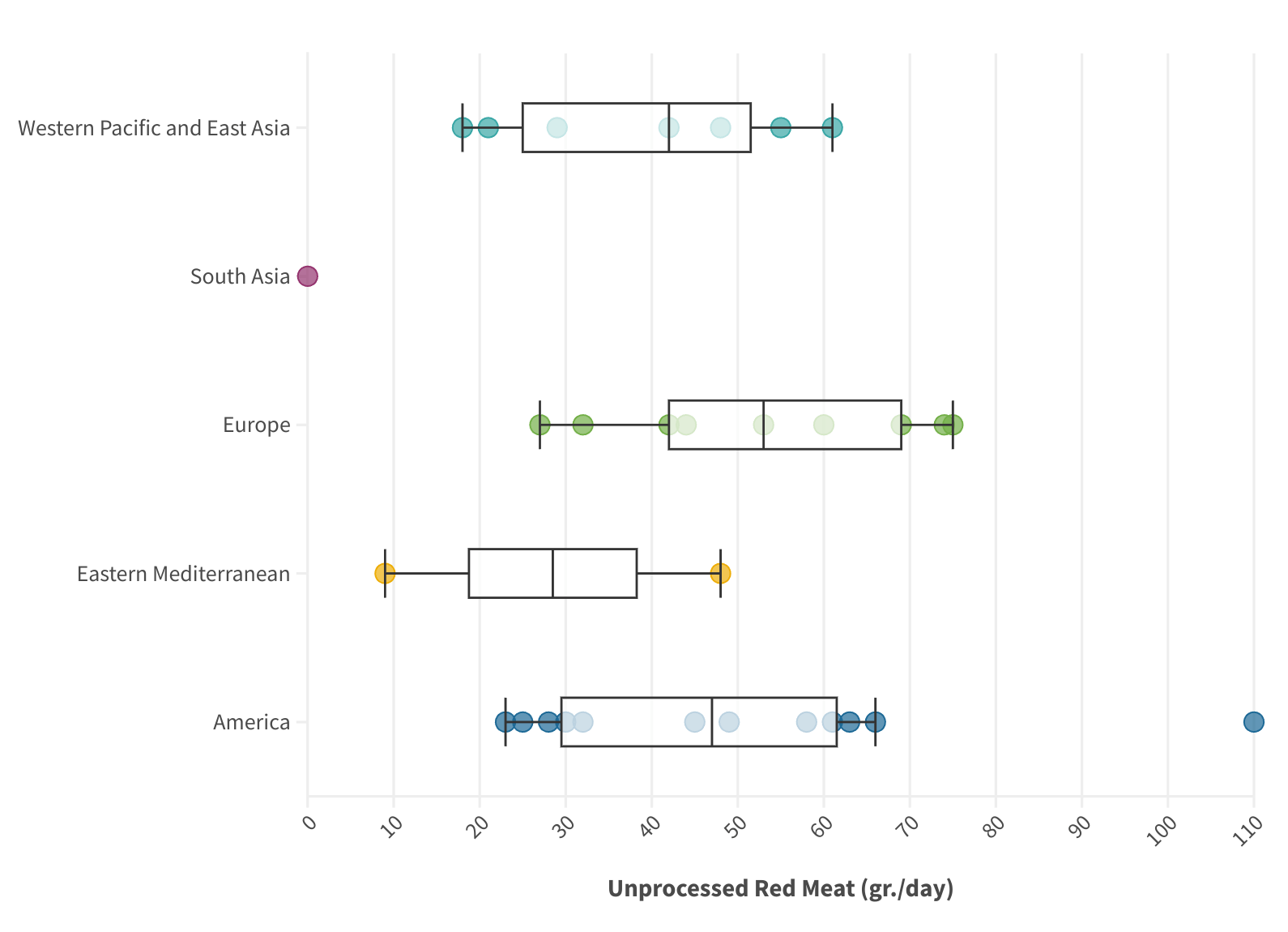
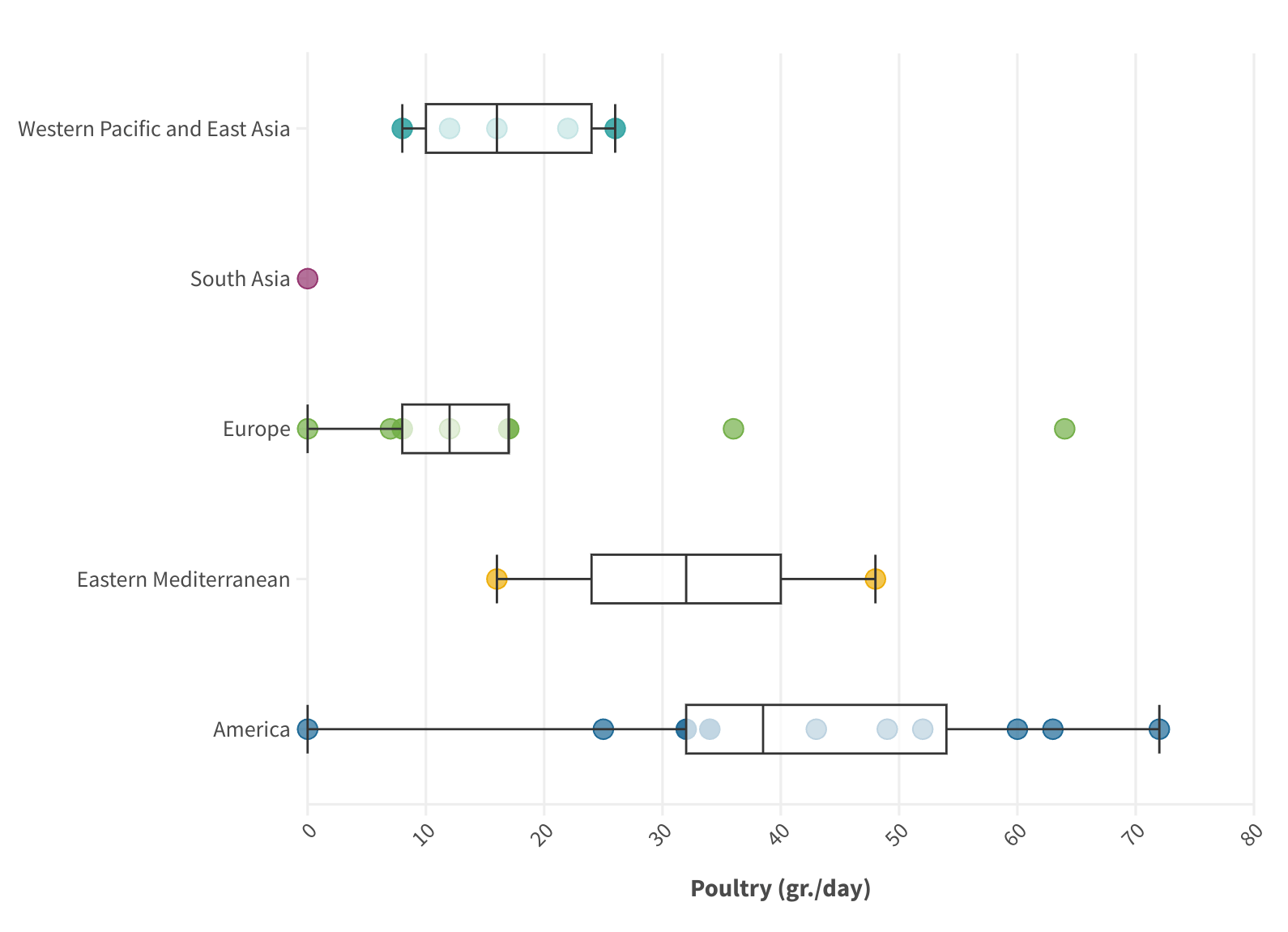
It is clear from these graphs that the consumption of meat can vary greatly, not only by region but also within regions. For example, the results for the Americas include the US, with some studies reporting the consumption of unprocessed red meat as high as 1,676 grams per day, compared to Mexico, which shows a maximum of 42 grams per day.
The same applies to processed meat. Switzerland recorded the highest average consumption at 49 grams per day, whereas the UK is the lowest at 3 grams per day, albeit with a much wider range of 0 to 80 grams per day.
Ultimately, the study found that greater consumption of each of these three types of meat was associated with an increased incidence of type 2 diabetes. The findings reported a Hazard Ratio (HR) of 1.10 per 100 g/day of unprocessed red meat, 1.15 per 50 g/day of processed meat, and 1.08 per 100 g/day of poultry. In simple terms, this means that for every 50 grams of processed meat consumed, our risk of developing type 2 diabetes increases by 15%, and this is in addition to other established risks, such as cancer. Therefore, consuming about 333 grams of processed meat per day would effectively double the risk of type 2 diabetes, even before factoring in the myriad of other associated health detriments.
This is one of the largest meta-analyses on the subject. Interestingly, the researchers reviewed past studies on the impact of poultry and diabetes, which had previously been inconclusive, and determined that those earlier studies were generally of low quality. This analysis provides some of the first conclusive evidence that consuming the flesh of birds, while heavily marketed to consumers as a "healthy" alternative, not only necessitates the exploitation and slaughter of countless animals, but also significantly contributes to human mortality via diseases such as type 2 diabetes.
The exact biological mechanisms behind this correlation are currently not entirely understood. Some research has established a link between the consumption of animal products and biomarkers for type 2 diabetes, though definitive causal pathways are still being mapped. It is possible that consuming meat affects type 2 diabetes risk through various avenues, such as impairing insulin sensitivity, altering pancreatic beta-cell function, or both. Another probable factor is trimethylamine N-oxide, a gut microbiota-dependent metabolite generated during the digestion of meat. Furthermore, the nitrate or nitrite additives used, alongside the formation of N-nitroso compounds during the processing of these animal products, present additional metabolic hazards.
These are just a few of the scientific hypotheses regarding how the consumption of animal flesh increases the risk for type 2 diabetes. If only the consequences of these dietary choices were constrained to human health, but the reality is far more profound. Animal agriculture is an unjust system that extracts an immeasurable toll on all animals and our global environment.
A change of lifestyle offers individuals a powerful means to combat a range of issues, including personal health problems, climate change, loss of biodiversity, global acidification, eutrophication, freshwater shortages, pandemic prevention, antibiotic resistance, save countless lives and much more. We know of no other efficient way for individuals to address these critical challenges simultaneously without waiting for government, corporate, or technological interventions. By changing lifestyle, people can take immediate and impactful action. We encourage you to embrace this lifestyle change today. Contact us for support and to connect with local communities in your area.