The state of the global climate emergency
Vegan Society of Canada News
April 26th 2026
2025 Global Climate Update: Record Heat, Emissions, and Impacts
Unprecedented Global Temperatures
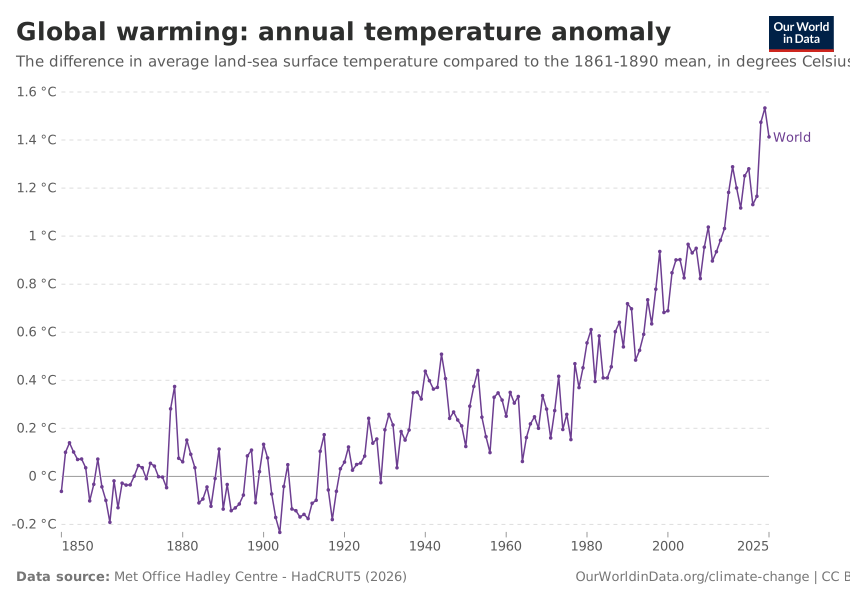
The Earth’s climate has entered uncharted territory. In 2024, the global mean surface temperature reached 1.55°C above the 1850–1900 pre-industrial baseline – the highest level ever recorded. Data for 2025 remain similarly extreme, at around +1.44°C (with a margin of error of ± 0.13°C). In fact, all leading climate datasets agree that 2023–2025 form the warmest three-year period on record. With a three-year average of 1.48°C, global temperatures are now hovering dangerously close to a sustained breach of the Paris Agreement limits.
The soaring temperatures in 2023 and 2024 occurred in years where strong El Niño weather patterns drove up average global temperatures. In short, El Niño is a naturally occurring warming of parts of the tropical Pacific Ocean that appears at irregular intervals. The warmer ocean waters shift atmospheric circulation patterns and push the Pacific jet stream south of its typical position, which often leaves parts of the northern United States and Canada warmer and drier than usual. Even without El Niño, 2025 was still in the top three hottest years on record. As of early 2026, forecasts show that El Niño will redevelop by summer 2026, raising the odds that near-term global temperatures will stay high.
Greenhouse Gases Soar (CO₂, CH4, and N2O)
El Niño is only one factor contributing to record-breaking temperatures. The primary driver of long-term warming remains human activity, particularly the release of greenhouse gases from fossil fuels, agriculture, and land-use change.
The Global Carbon Budget reported that 2025 was another record-setting year for CO₂ emissions, the fourth year in a row that the record has been broken. According to data from NOAA’s Global Monitoring Laboratory, atmospheric CO₂ climbed to around 425 ppm on average for 2025, which is more than a 50% increase over pre-industrial levels. Other greenhouse gases are also on the rise; methane (CH4), a potent but short-lived greenhouse gas, averaged around 1,945 ppb (over 160% above pre-industrial), and nitrous oxide (N2O) also hit record values (~338 ppb).
The largest source of anthropogenic (human-influenced) methane is agriculture, which accounts for roughly 40% of methane emissions from human activity. The main contributor is the world's over 1.5 billion cattle raised for meat and dairy production worldwide; cows produce methane as a byproduct of digestion, releasing more than 200 billion pounds of methane into the atmosphere each year. Rice production is also a large contributor to methane emissions.
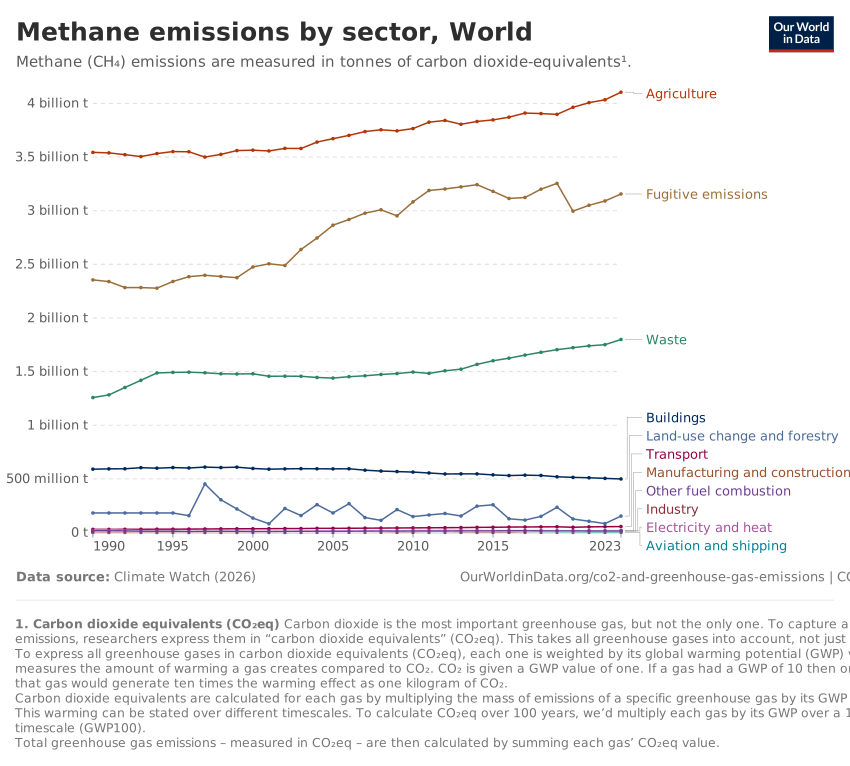
Emissions from oil and gas extraction and transportation (“fugitive emissions”) contribute about 32% of methane emissions, and waste and landfills add around 18%.
Methane is a super-emitter in the short term: over a 20-year span, it has over 80 times the global warming potential of CO₂. Because of this potency, scientists estimate current CH₄ levels are already responsible for roughly 0.5°C of warming (about 30% of anthropogenic warming to date). Importantly, methane molecules break down in only ~12 years, so cutting CH₄ emissions yields rapid climate payoffs. Experts emphasize that cutting today’s methane releases is one of the fastest ways to slow near-term warming.
Denmark, a major dairy and pork producer, has introduced the world’s first tax on agricultural greenhouse gas emissions, set to take effect in 2030. With agriculture responsible for roughly a quarter of the country’s emissions, the policy is central to achieving its target of cutting overall emissions by 70%. The plan places a levy on livestock emissions that exceed reduction thresholds, with revenues reinvested into a fund to help farmers adopt lower-emission practices. In doing so, Denmark sets an important global precedent, signalling that the "polluter pays" principle will eventually apply to livestock production, challenging the exemption historically enjoyed by the meat and dairy industries.
Carbon Sinks Under Strain
The planet’s natural carbon sinks are increasingly under strain. A carbon sink is any natural or artificial system that absorbs and stores more CO₂ from the atmosphere than it releases. Among the most important examples are the world’s oceans, which have absorbed roughly 90% of the excess energy generated by greenhouse gas emissions. However, this buffering role comes at a cost. Global ocean heat content reached new record highs in 2025, marking the ninth consecutive year that the record has been broken. This also makes seawater more acidic, which has had devastating impacts on the world’s coral reefs; global coral monitoring shows that from 2023–2025, coral bleaching has affected an estimated 84% of reefs. These ecosystems are keystone habitats that support entire marine food webs, and their decline threatens both biodiversity and food security.
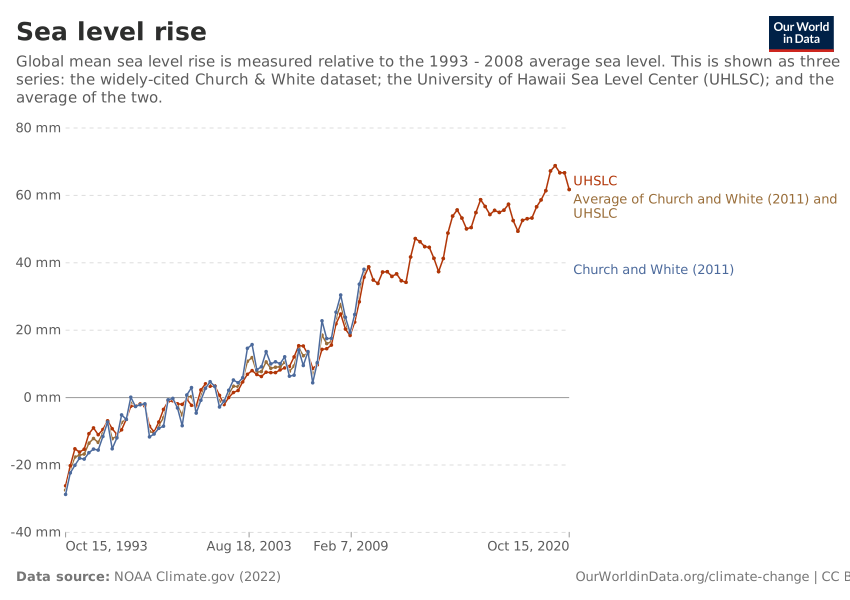
Another consequence of warmer oceans is rising sea levels. Satellite measurements show that global mean sea level now sits more than 10 cm above the 1993 average, marking the thirteenth consecutive year of record highs. Sea levels are rising at roughly 3–4 millimetres per year, driven by both melting ice sheets and glaciers as well as the thermal expansion of seawater as it warms. Rising seas amplify storm surges and coastal flooding, increasing risks for communities around the world.
Meanwhile, on land, the great carbon-buffering forests are weakening. In the Amazon Rainforest, temperatures are rising, the region is becoming drier and more prone to fires, and large areas of forest are being cleared. A recent study estimates that by 2050, between 10% and 47% of the Amazon rainforest could face overlapping stresses from heat, drought, deforestation, and fire. These pressures could push large areas of the forest toward major ecological changes, potentially weakening its ability to absorb carbon and increasing the risk that parts of the Amazon could shift from a carbon sink to a carbon source, which is already a reality in some parts.
Scientists have warned that if deforestation reaches roughly 20–25% of the Amazon, large parts of the forest may no longer receive enough rainfall to sustain a rainforest ecosystem and could gradually shift toward a drier savanna-like landscape. Estimates suggest that about 15% of the Amazon has already been cleared, and another 17% has been “degraded” by human activity, primarily for the purpose of converting land into pasture for cattle. In other words, one of the planet’s most important ecosystems is being pushed toward collapse largely to produce a food source that we don’t need.
Cryosphere’s in Rapid Decline
Ice is disappearing even faster than predicted. The latest World Meteorological Organization update says the hydrological year 2023/2024 (October 2023–September 2024) was the third consecutive year that all monitored glaciated regions around the world recorded net mass loss, and that reference glaciers lost about 450 gigatonnes of ice. That was the largest loss on record in the WMO summary, and it added about 1.2 mm to global sea-level rise. Unfortunately, Venezuela lost its last glaciers in 2024, becoming the first Andean country to do so, and Colombia’s glaciers are disappearing too.
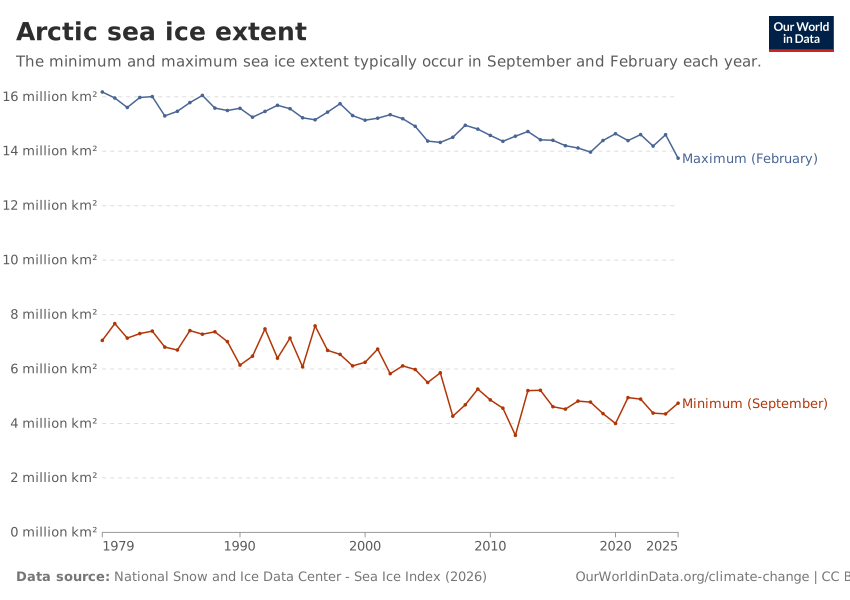
The Arctic is often called the planet’s “canary in the coal mine” because it reacts faster than the rest of the world to climate change. The Arctic has warmed nearly three times faster than the global average, and the 2025 Arctic Report Card says the thickest, oldest sea ice has declined by more than 95% since the 1980s. It also says the 2025 sea-ice minimum was the 10th lowest on record, while the March 2025 maximum was the lowest in the satellite record.
Extreme Weather: Climate Change in Action
With the planet so hot, extreme weather has become the new normal. World Weather Attribution (WWA) reported that they counted 157 extreme weather events in 2025, such as heatwaves, floods, storms, droughts, wildfires and cold spells, that met their “trigger” criteria. The criteria are meant to ensure that they capture only the most impactful events worldwide, and each weather event has its own unique criteria. For example, the threshold for floods includes any one of the following criteria: more than 100 deaths, more than a million people affected, more than 50% of the total population affected, or a declaration of a state of emergency or disaster on the national or state level. Of the 157 events, the group closely studied 22 and found that 17 were more likely to have occurred or more intense as a result of climate change.
Recent advances in extreme event analysis methods are even allowing us to link specific companies to extreme weather events. One study linked major fossil fuel and cement companies to specific, sometimes deadly heatwaves, including the 2021 Pacific Northwest heat dome that caused an estimated 1,400 deaths between Canada and the United States.
Another study published in 2025 analyzed climate and mortality data from over 2,000 locations in 67 countries. The study found that over 178,000 global deaths were associated with the 2023 heatwaves, and more than half were attributable to human-induced climate change. An analysis by WWA found that these heatwaves in Europe and North America would have been virtually impossible to occur if humans had not warmed the planet by burning fossil fuels. Together, these findings continue to demonstrate that climate change is no longer a distant or abstract risk; it is already causing enormous loss and suffering today.
Wildfires and Droughts: A Fiery Future
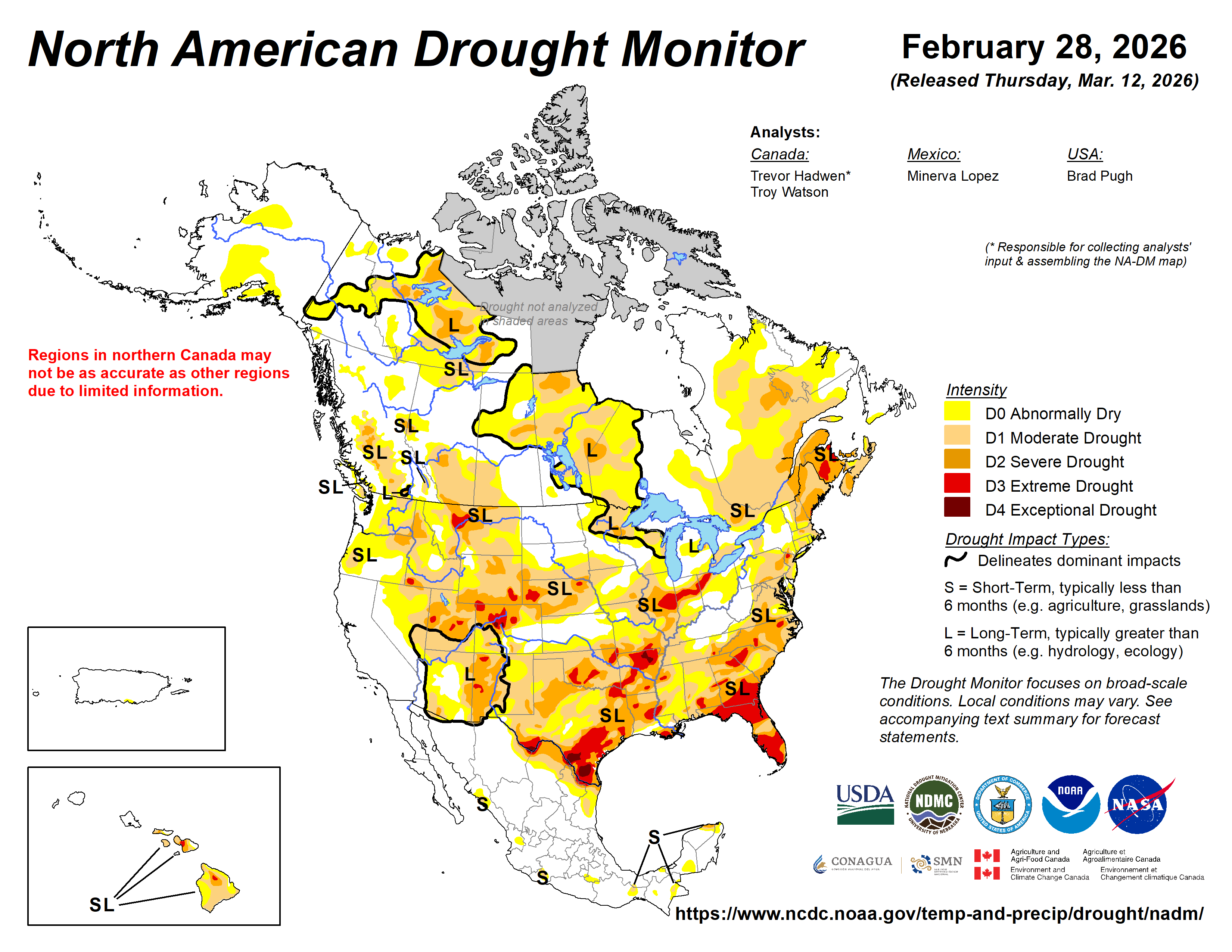
Hot, dry conditions are igniting record fires around the world. In the past two years, regions around the globe have seen some of the worst droughts ever recorded, drying out vegetation and turning forests into tinder for fires. Across North America, abnormally dry and drought conditions are widespread, with large regions experiencing prolonged and severe dryness. Europe and the Mediterranean also saw intense drought conditions last year, finishing the year with over 1,000,000 hectares of burnt area.
Canada provides a particularly striking example of this global trend. The 2023 wildfire season was the most extreme on record, with approximately 18.4 million hectares burned and up to 230,000 people displaced. According to the 2023 National Inventory Report, wildfires in Canada released 980 megatons (Mt CO2 e), nearly one billion tonnes, of greenhouse gases from Canada’s forests. That is more than the country’s total emissions from all other sources combined. If Canada’s wildfire emissions were counted as a nation, they would have ranked as the ninth-largest emitter in the world that year.
In the years since, Canadian wildfire activity has not reached the extreme highs seen in 2023. However, both 2024 and 2025 still rank among the 10 worst seasons in recorded Canadian history, and 2025 in particular was declared the country’s second-worst wildfire year on record; national agencies reported that over 8.3 million hectares burned last year, an area larger than the province of New Brunswick. In some provinces, like Nova Scotia and New Brunswick, the response was to temporarily ban travel and recreational activity in wooded areas for safety and to reduce ignition risk. While we hope that these measures don’t become the new standard, experts are worried that this trend in wildfires is becoming the new normal.
South America, Indonesia, Siberia, and Australia have all experienced severe wildfires in recent years, too, and research shows that forest recovery is becoming more difficult as repeated fires and hotter conditions slow regrowth and degrade ecosystems. Burning forests release large amounts of carbon dioxide, and emissions can continue for years after a fire as dead vegetation decays. One 2024 study found that globally, CO₂ emissions from forest fires increased by 60% between 2001 and 2023, reflecting a rise in fire activity and intensity that is showing no sign of slowing down.
In short, fire and drought are feeding each other in a vicious cycle: hotter, drier weather produces more fires, and those fires release carbon and smoke that contribute to further warming and drying.
Impacts on People, Health, and Economy
The toll on human societies and economies is now immense. Climate disaster-related spending has reached an estimated $18.5 trillion since 2000, according to Bloomberg Intelligence, based on aggregated global loss data. In the United States, climate-linked disasters such as hurricanes, floods, and wildfires are now costing nearly $1 trillion per year, approaching 3% of GDP, directed toward recovery, rebuilding, and adaptation. Major recent events illustrate this scale, including Hurricane Helene in 2024, which caused an estimated $225 billion in damages and economic loss according to AccuWeather, followed by the January 2025 Los Angeles wildfires, which were estimated to cost more than $250 billion.
The human toll is just as severe. According to the WHO, 3.6 billion people already live in areas highly susceptible to climate change, which is expected to cause approximately 250,000 additional deaths per year between 2030 and 2050. One study examining heat-related human health impacts across the globe between 1991 and 2018 found that 37% of heat-related deaths can be attributed to anthropogenic climate change.
Climate change is causing death and illness in ways beyond just extreme weather events like heatwaves, storms and floods. Just as deadly is the disruption of food systems, increased spread of zoonotic, food-, water-, and vector-borne diseases, and mental health issues, which are disproportionately felt by the most vulnerable and disadvantaged populations. For example, in the Horn of Africa, the World Food Programme (WFP) reported that the longest drought in recorded history gave way to flooding after five failed rainy seasons, killing farmed animals, destroying land, and pushing more than 23 million people in Ethiopia, Kenya, and Somalia into severe hunger.
The impacts on food systems are expected to be felt globally. Rising heat stress is already reducing wheat productivity and is projected to significantly lower yields worldwide. As export capacity tightens, pressure on global food markets is expected to intensify, further deepening food insecurity in many already vulnerable regions.
Global Governance: COP29, COP30 and Accountability
Despite the crisis, international policy responses have so far been lukewarm. At COP29 (Baku, Nov 2024), the conference’s main outcome was a new finance goal: developed countries agreed to triple climate finance for developing countries by 2030, aiming for $300 billion per year by 2035 (up from the old $100 billion goal) and to mobilize $1.3 trillion per year by 2035 for climate action. Crucially, these targets are framed as collective “goals” rather than binding commitments, and there was no agreement on phasing out fossil fuels or strengthening national strategies.
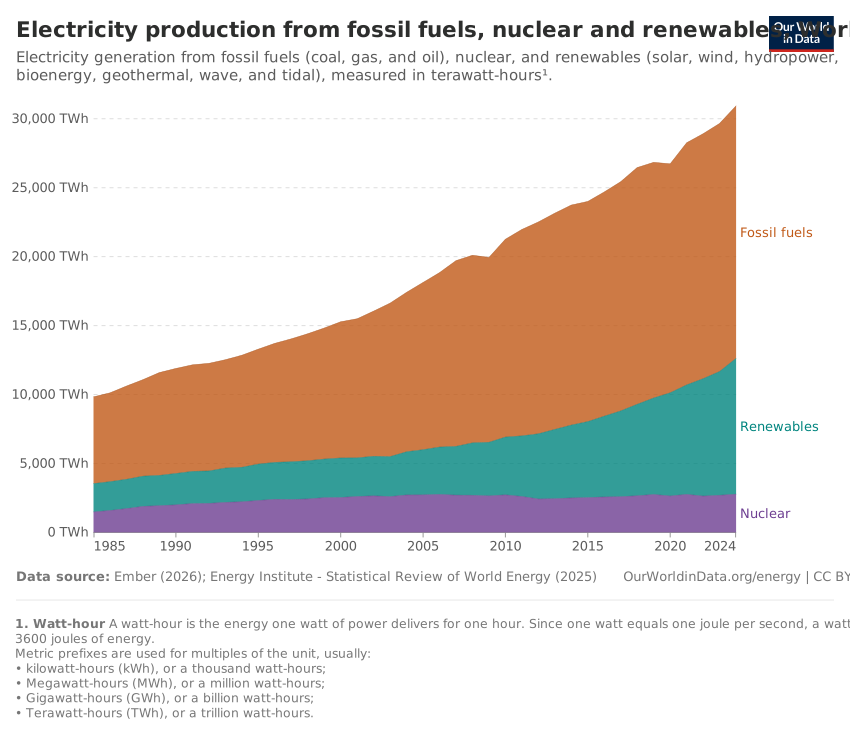
COP30 (Belem, Nov 2025) also made no progress toward the phase-out of fossil fuels. Language at COP28, which set out for the first time a pledge by all countries to “transition away from fossil fuels”, failed to be reconfirmed at COP29, and failed again at COP30, which omitted any mention of fossil fuels in its final agreement. In short, no new mandatory emission cuts or fossil-fuel phase-out dates were adopted at COP30. Negotiators continued to talk about finance and technology, but all major emitters remain free to keep exploring oil and gas.
One positive step was made in July 2025, when the International Court of Justice (ICJ) issued a landmark advisory opinion stating that states have an obligation under international law to prevent climate change, and that failure to do so can have legal consequences. The ICJ held that failure to take adequate climate measures, for example by subsidizing fossil fuels, can constitute a wrongful act under international law and could incur legal consequences such as reparations for damages. Unfortunately, the ICJ opinion is advisory and not directly enforceable.
Adaptation, Early Warnings, and the “Just Transition”
What can be done to adapt to the extreme weather events that climate change has made the new normal? Many countries around the world are using technology to provide warnings that will allow people to be better prepared in the face of disaster. These “early warning systems” are tools designed to detect, analyze, and forecast hazardous climate-related events, like floods, droughts, heatwaves, and wildfires. As of 2025, 119 countries (60%) report having comprehensive systems in place, which is more than double the number in 2015. Countries lacking effective warning systems in place have a disaster mortality rate nearly six times higher than countries with substantial or comprehensive systems. Still, about 40% of countries lack full multi-hazard coverage, leaving large vulnerable populations unprotected. UNEP estimates developing countries will need roughly $310 to 365 billion per year by 2035 to adapt infrastructure and communities for climate risks. In short, scaling up resilient infrastructure, emergency planning and risk insurance is urgently needed to prevent ever-higher losses.
One of the challenges in addressing climate change is ensuring a “just transition”, which essentially means shifting to a low-carbon economy that is not only environmentally effective but also socially fair. In simple terms, a just transition means that the benefits and burdens of climate action are shared equitably, with protections for workers, communities, and countries that might otherwise be left behind.
For example, as demand for critical minerals (lithium, cobalt, nickel, rare earths, etc.) surges for batteries and renewables, experts warn against repeating colonial patterns of resource plunder. The UN Secretary-General’s Panel on Critical Energy Transition Minerals developed guiding principles to help us avoid repeating the mistakes of the past, calling for human rights protections, environmental safeguards, equity, benefit-sharing, and transparent governance. Many of these same standards have existed in extractive industries for decades, yet mining in parts of the world continues to be associated with environmental degradation, weak oversight, exploitation and limited local benefit. Although the current framework emphasizes “leaving no one behind” and fostering domestic development, there is still concern that, without strong enforcement mechanisms, the clean energy transition could replicate the same patterns it seeks to replace.
The green transition must also include fair benefit-sharing. Marginalized communities in mineral-rich countries should gain jobs, infrastructure and clean energy, not just pollution. Social-science research confirms that perceived fairness is a strong driver of public support for climate policy: if people feel costs or sacrifices are unfairly placed, support evaporates. Thus, measures like carbon pricing, subsidies, retraining programs and international finance must be designed with equity and justice at their core, or risk provoking backlash and delay.
Climate Change and Zoonotic Risks
In 2024, an outbreak of highly pathogenic H5N1 avian influenza spread into U.S. dairy herds across many states, marking the first time that these bird flu viruses had been found in cows. The virus has already been known to transmit to other mammals, including humans; since 2003, over 960 human infections have been reported, with a mortality rate of around 50%. When a pathogen is transmitted from a non-human animal to a human animal, the event is called a zoonotic “spillover”, and they represent some of the most dangerous inflection points in global health. For comparison, SARS-CoV-2, the COVID-19 virus, emerged via a spillover and went on to cause a global pandemic.
In the current outbreak, there have already been human cases attributed to direct exposure to infected cattle. Although there were only approximately 1,070 cases among the 28,000 dairy herds officially reported, and the CDC has reported that the risk to public health is low, experts warn that the reality of the situation is likely much larger in scale and the consequences much more dire, especially if the outbreak continues; the longer and more widely the virus spreads, the greater the likelihood that a human-adapted strain will emerge. With each new infection, the virus has another opportunity to evolve, potentially acquiring mutations that enhance its ability to transmit more efficiently between humans.
Climate change appears to be amplifying these zoonotic threats. Some reports show that global warming is shifting wild-bird migratory routes and seasons in ways that help H5N1 and other pathogens spread. For example, milder winters are pushing some bird populations northward, and earlier springs are altering stopover patterns. These changes increase the chance of “viral reassortment”, or the exchange of viral genetic material, between species. In addition, these changing seasonal conditions are enabling some moisture-dependent pathogens to survive and spread more easily, while cooler, wetter environments can prolong the survival of influenza viruses in bird droppings and contaminated water, further facilitating transmission. These shifting ecologies, combined with longer virus survival in the environment, mean new variants can emerge more easily.
Conclusion: Connecting the Dots and the Road Ahead
In summary, the extraordinary data of recent years make clear that climate change is a present crisis. Record-breaking heat, greenhouse gas concentrations, and extreme disasters confirm that continuing on our current path is causing “severe, pervasive and irreversible impacts for people and ecosystems”, as described by the United Nations. Every fraction of a degree above 1.5°C compounds the risk to people and ecosystems. Crucially, these impacts are unequally borne: the poorest and most vulnerable communities, who have contributed least to the problem, face the greatest dangers.
Adaptation measures (such as early-warning systems and resilient infrastructure) can reduce harm from the warming already locked in, but they are not enough on their own. Rapid, deep cuts in greenhouse gas emissions, especially from fossil fuels and agricultural methane, combined with a transition to greener alternatives that are fair to workers and communities, can prevent catastrophe.
In practical terms, the science shows we have the tools to limit warming and its worst impacts, but deploying them requires political will and global cooperation. Our track record on this is notoriously poor.
So where does that leave us? As we’ve stated in a previous article, there are very few types of changes we can make that can still have a meaningful impact. They include transport, energy generation, food production and population growth. Our position is that what we eat is one of the easiest things to change in comparison to other options. Not only is it a benefit to combat climate change, but it helps our health, the antibiotic crisis, zoonotic diseases, fresh water shortage, loss of nature and more.
While the past few years have seen many disappointing milestones, the pressure on individual companies and governments is mounting. It is time that we stop putting our selfish interests above the lives of others. Meaningful change does not begin in parliament; it begins with us. When society changes its values and demands better, our leaders will follow.